
Moving goods from origin to destination involves far more than simply booking a truck or container. Every transportation decision creates a cascade of consequences affecting cost, speed, reliability, and risk. Whether you’re shipping temperature-sensitive pharmaceuticals by air, bulk commodities by sea, or consumer goods by truck, understanding the fundamental principles of freight transport empowers you to make informed choices that align with your business objectives.
The modern transportation landscape offers unprecedented options—but also unprecedented complexity. Multiple modes, countless carriers, fluctuating market conditions, and intricate regulatory requirements can overwhelm even experienced logistics professionals. This comprehensive resource breaks down the essential knowledge you need to navigate freight transportation confidently, from selecting the optimal mode for your specific cargo to managing the hidden costs that erode profit margins.
The foundation of effective freight management lies in matching transportation modes to your specific requirements. This decision extends far beyond simple geography—it encompasses product characteristics, customer expectations, budget constraints, and strategic priorities.
Every transport mode occupies a distinct position on the cost-speed-reliability spectrum. Air freight delivers exceptional speed but commands premium pricing. Ocean freight offers unmatched economy for large volumes but requires patience and careful planning. Ground transport provides flexibility and accessibility, particularly for regional distribution.
Think of this like choosing a travel method for a vacation: flying gets you there fastest but costs more; driving takes longer but gives you flexibility and lower expenses; taking a cruise is economical for groups but follows a fixed schedule. Similarly, your freight mode selection should reflect what matters most for each specific shipment—not a one-size-fits-all approach.
Consider these key evaluation criteria:
Your product’s physical and commercial attributes should drive mode selection. Perishable goods demand speed and often require temperature-controlled environments, making air freight or expedited refrigerated trucking essential despite higher costs. Conversely, stable raw materials like minerals or grains tolerate longer transit times, making bulk ocean transport economically sensible.
Product lifecycle stage matters significantly. During launch phases, when demand is uncertain and market positioning critical, prioritizing speed and reliability may justify premium transportation. As products mature and competition intensifies, cost optimization typically becomes paramount, shifting preference toward more economical modes.
Multimodal transportation—combining two or more modes in a single journey—can unlock advantages unavailable from any single mode. A typical example involves ocean freight for the international leg followed by trucking for final delivery, balancing economy with door-to-door service.
However, multimodal solutions introduce complexity through additional handling points, transfer coordination, and potential delays at modal transitions. Each handoff represents a risk point where cargo might be delayed, damaged, or lost. The benefits must clearly outweigh these operational challenges.
Road freight remains the backbone of domestic and regional distribution, offering unmatched flexibility and accessibility. Understanding trucking dynamics enables you to optimize costs while maintaining service quality.
Full Truckload (FTL) shipments—where your cargo occupies an entire trailer—offer speed and security advantages over shared Less-than-Truckload (LCL) options. Your freight moves directly from origin to destination without intermediate stops, reducing handling and transit time.
Maximizing FTL efficiency requires attention to trailer utilization. Even if your shipment doesn’t physically fill a trailer, you’re paying for the entire space. Strategic planning—such as consolidating multiple orders, optimizing packaging dimensions, or coordinating with suppliers—can dramatically improve the economic equation.
The trucking market operates through two primary channels. Dedicated fleets or contract carriers provide consistent capacity at predictable rates, ideal for regular shipping patterns. The spot market offers immediate capacity for irregular or surge demand but exposes you to market cycle volatility.
During tight capacity periods—such as peak retail seasons or after natural disasters—spot rates can multiply several times over contract rates. Conversely, during soft markets, spot rates may undercut contract commitments. Sophisticated shippers maintain a balanced portfolio: contracted capacity for base volumes with spot market access for flexibility.
Detention fees—charges incurred when loading or unloading exceeds allotted time—represent a significant hidden cost in trucking. These fees compensate carriers for idle equipment and driver time. Efficient dock operations, advance preparation, and clear communication minimize detention exposure.
Freight theft poses another serious concern, particularly for high-value consumer goods. Thieves often target trucks during rest stops or unsecured parking. Mitigation strategies include GPS tracking, vetted carrier selection, route planning that avoids high-risk areas, and facility security requirements.
Sea freight moves the vast majority of international trade by volume, offering economies of scale unmatched by any other mode. However, this efficiency comes with complexity that catches unprepared shippers off-guard.
Ocean carriers operate on published schedules, but actual service reliability varies dramatically by route and carrier. Blank sailings—when carriers cancel scheduled departures—disrupt plans and create cascading delays. These cancellations typically occur during demand slumps when carriers reduce capacity to maintain rate levels.
Carrier alliances, where competing lines share vessels and coordinate schedules, dominate major trade routes. While alliances improve coverage and frequency, understanding their operational dynamics helps set realistic expectations for schedule reliability.
The choice between Less than Container Load (LCL) and Full Container Load (FCL) fundamentally shapes your ocean freight experience. LCL allows smaller shippers to access ocean transport by sharing container space with other cargo, paying only for space used. However, this economy comes at a cost: longer transit times due to consolidation and deconsolidation, increased handling risk, and less schedule flexibility.
FCL provides exclusive container use, offering faster transit, reduced handling, and better cargo security. The break-even point typically occurs around 15-20 cubic meters of cargo, but this varies by route and commodity. Beyond pure economics, consider cargo value, fragility, and time sensitivity in this decision.
Ocean freight quotes rarely reflect total delivered cost. Numerous surcharges—fuel adjustments, peak season premiums, port congestion fees, documentation charges—can add 30-50% to base rates. Request comprehensive quotations that itemize all anticipated charges to enable accurate comparison.
Demurrage and detention fees represent particularly painful surprises for inexperienced importers. Demurrage charges accrue when containers remain at the port terminal beyond free time (typically 3-7 days). Detention applies when carrier-owned containers aren’t returned promptly after cargo removal. These fees escalate quickly, sometimes reaching hundreds of dollars daily. Streamlined customs clearance, coordinated inland transportation, and realistic planning prevent most issues.
Air transport trades economy for speed, serving shipments where time value exceeds cost premium. Understanding when and how to leverage air freight prevents both unnecessary expenses and catastrophic delays.
Emergency logistics situations—equipment failures halting production, medical supplies for urgent treatment, replacement parts for grounded aircraft—justify air freight despite costs approaching or exceeding cargo value. The alternative cost of continued downtime dwarfs transportation expenses.
Beyond emergencies, high-value, time-sensitive goods—electronics launches, fashion apparel, perishable seafood, pharmaceuticals—routinely move by air. The value-to-weight ratio matters enormously: a kilogram of smartphones easily absorbs air freight costs; a kilogram of furniture cannot.
Air freight pricing operates on chargeable weight—the greater of actual weight or volumetric weight (dimensional weight). This calculation penalizes low-density cargo, as airlines sell both weight and space capacity. A lightweight but bulky shipment pays for the space it occupies, not just its actual mass.
Understanding this dynamic enables optimization through packaging design. Reducing outer dimensions by even a few centimeters can drop shipments into lower volumetric weight brackets, yielding significant savings on recurring shipments.
Aircraft have strict limitations on cargo dimensions, weight distribution, and hazardous materials. Dangerous goods restrictions prohibit or heavily regulate batteries, flammable liquids, compressed gases, and numerous other substances. Violations carry severe penalties and can delay shipments indefinitely.
Different aircraft types—nose-loading freighters vs side-loading configurations, dedicated cargo planes vs passenger aircraft belly cargo—offer varying capabilities. Oversized items may require specialized charter arrangements rather than scheduled service. Early consultation with carriers about technical feasibility prevents costly surprises.
Commodities like grain, coal, ore, chemicals, and petroleum require fundamentally different transportation approaches than containerized finished goods.
While containers dominate manufactured goods transport, bulk raw materials typically move as break bulk or in specialized bulk carriers. This method reduces handling costs and vessel rates for large quantities but limits destination options to ports with appropriate discharge equipment.
Liquid bulk (crude oil, chemicals, wine) and dry bulk (grain, coal, ore) each require specialized vessels and handling infrastructure. Understanding discharge capabilities at destination ports—conveyor systems, pneumatic pumps, grain elevators—affects total logistics cost and time as much as ocean freight rates.
Bulk commodities face unique risks. Moisture damage during ocean transit can ruin grain cargoes worth millions. Certain materials, particularly coal and agricultural products, risk spontaneous combustion if moisture and temperature conditions align unfavorably. Proper ventilation, moisture monitoring, and vessel selection mitigate these risks.
Charter markets for bulk carriers operate differently from container line bookings, with rates fluctuating based on vessel availability, route positioning, and commodity demand. Long-term contracts provide rate stability; spot charters offer flexibility but expose shippers to market volatility.
Accurate delivery timing separates effective logistics from expensive chaos. Yet many shippers maintain unrealistic expectations about transit time predictability.
Dwell time—the period cargo sits idle at terminals, warehouses, or customs facilities—often exceeds actual movement time. A container might cross the Pacific in 14 days but spend another week awaiting customs clearance and inland transport. Optimizing dwell time through documentation efficiency, pre-clearance programs, and coordinated pickup scheduling often delivers greater time savings than selecting faster transportation modes.
The choice between direct services and transshipment significantly impacts both time and reliability. Direct routes eliminate intermediate handling but operate less frequently. Transshipment routes offer more sailing options but add connection risk—missing a connection can delay shipments by a week or more.
Estimated arrival times (ETAs) represent targets, not guarantees. Carriers typically qualify ETAs with extensive disclaimers because numerous factors beyond their control—weather, port congestion, equipment failures, customs inspections—affect actual performance. Historical performance data provides better guidance than published schedules.
Customs clearance impact varies enormously based on product classification, documentation quality, importer compliance history, and random inspection selection. First-time importers or new product categories often experience longer clearance times than established flows.
Professional supply chain planning incorporates time buffers that account for normal transit variability. Buffer sizing should reflect route characteristics, mode reliability, and consequence of delay. Critical components feeding just-in-time production require larger buffers than promotional items with flexible launch dates.
Think of buffers like arriving at the airport: domestic flights might warrant 60 minutes early; international departures justify 2-3 hours. The principle remains identical—buffer size should match variability and consequence of missing the target.
For companies operating their own fleets or specialized equipment, asset management directly impacts operational efficiency and cost structure.
Downtime cost extends far beyond repair bills—idle vehicles generate zero revenue while continuing to depreciate and incur fixed costs. Preventive maintenance programs, though requiring upfront investment, dramatically reduce unexpected failures and their associated disruption.
Critical maintenance like diesel particulate filter (DPF) cleaning cannot be deferred without consequence. Skipping these services degrades engine performance, increases fuel consumption, and accelerates wear, ultimately costing far more than the avoided maintenance expense.
The decision between in-house repair shops and outsourced maintenance depends on fleet size, geographic dispersion, and technical complexity. Large, concentrated fleets often justify dedicated facilities; smaller or dispersed operations typically benefit from specialized service provider relationships.
Telematics systems—combining GPS tracking, engine diagnostics, and driver behavior monitoring—transform asset management from reactive to proactive. Real-time diagnostics alert

Predictive maintenance is not about predicting failures; it’s about re-engineering your entire maintenance operation to make those failures obsolete. It transforms unforeseen catastrophic costs into small, manageable repairs by catching failure modes before they escalate. It synchronizes remote diagnostics with…
Read more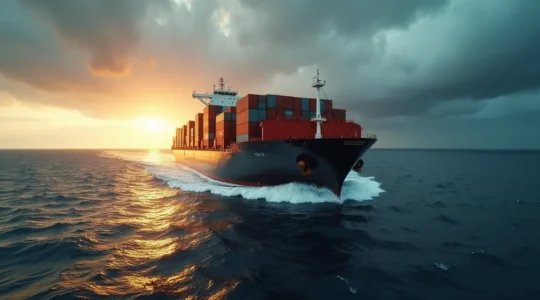
In today’s volatile world, avoiding geopolitical risk is a luxury most commodity shippers don’t have. The key to survival is not avoidance but control. This guide argues that true resilience comes from mastering the granular, physical integrity of your cargo…
Read more
Effective load planning for oversized cargo is not a checklist exercise; it’s a strategic process of managing interlocking constraints where dimensional integrity and regulatory compliance dictate every choice. Aircraft selection is an operational trade-off: a 747’s nose door offers linear…
Read more
The high cost of emergency freight isn’t the problem; it’s the solution to a much bigger one—catastrophic production downtime. Volumetric weight optimization is a direct lever, capable of cutting air freight costs by up to 20% through smart packaging. For…
Read more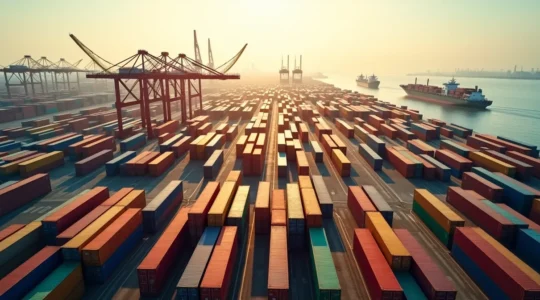
Securing container space is not about luck; it’s about outsmarting the system by understanding the operational game carriers play. Carriers manage profitability with “blank sailings,” which you must anticipate through proactive forecasting, not reactive booking. Flawless documentation and strategic alliance…
Read more
You think negotiating FTL rates is about arguing over the fuel surcharge index. It’s not. The real leverage comes from eliminating the operational friction—like detention and poor loading—that carriers bake into their prices. Your goal is to become a “shipper…
Read more
The fastest way to cut transit time isn’t by choosing a faster mode of transport, but by eliminating the hidden “dead time” within your existing ocean freight legs. Carrier-provided ETAs and “direct” service labels often conceal scheduled stops, transshipment delays,…
Read more
Choosing freight based on the cheapest rate is a critical mistake in today’s volatile market; it often leads to higher total costs and supply chain failure. Success hinges on calculating the Total Landed Cost, which includes hidden fees, transit time…
Read more