
Moving freight from origin to destination rarely involves a single mode of transport. Intermodal logistics orchestrates the seamless movement of goods across multiple carriers—ocean vessels, trains, and trucks—each playing a specialized role in the supply chain. This approach combines the cost efficiency of long-haul maritime and rail transport with the flexibility of road delivery, creating networks that can reach virtually any destination worldwide.
Yet the complexity of coordinating different transport modes, handling equipment, and managing transfers presents significant challenges. From selecting the right vessel type for your cargo to ensuring smooth transitions at terminal facilities, every decision impacts transit times, costs, and cargo integrity. Understanding how these elements interconnect empowers logistics professionals to design resilient supply chains that balance speed, reliability, and economics.
This comprehensive resource explores the fundamental building blocks of intermodal logistics: the transport modes that form the network, the integration strategies that minimize friction between modes, and the operational practices that ensure cargo moves efficiently from container to truck to rail and back again.
Ocean shipping forms the backbone of international intermodal networks, handling the vast majority of intercontinental freight. The choice of vessel directly influences capacity, speed, port accessibility, and ultimately the economics of your entire supply chain.
The industry spans a spectrum from megaships carrying over 20,000 TEU to smaller feeder vessels serving regional routes. Megaships deliver exceptional unit cost efficiency on high-volume trunk routes—think Asia to Europe or transpacific lanes—but require deep-water ports with specialized infrastructure. Feeder vessels bridge the gap, redistributing containers from these hub ports to secondary markets, much like airline hub-and-spoke networks. Your cargo’s final destination often determines which vessel types will handle it across its ocean journey.
Beyond standard container ships, intermodal chains incorporate specialized vessels for specific cargo types. RoRo (Roll-on/Roll-off) vessels excel at transporting vehicles and wheeled equipment, eliminating the need for cranes by allowing cargo to drive directly aboard. Container ships, conversely, offer superior protection and stackability for general cargo. Geared vessels carry their own cranes, enabling service to ports lacking shoreside lifting equipment—essential for emerging markets—while gearless vessels depend on port infrastructure but maximize cargo space.
Vessel age significantly impacts reliability and operating costs. Older ships face higher maintenance requirements, increased breakdown risks, and often consume more fuel per container moved. Meanwhile, greener vessel technologies—including scrubbers, LNG propulsion, and optimized hull designs—are reshaping the maritime segment of intermodal chains. These innovations reduce emissions but may command premium rates, creating a trade-off between environmental performance and immediate cost savings.
Rail transport offers a compelling middle ground: more cost-effective than trucking for distances beyond several hundred kilometers, yet faster and more flexible than ocean shipping for continental movements. For high-volume, long-distance overland routes, rail infrastructure forms the economic foundation of intermodal logistics.
A detailed rail versus truck cost analysis typically shows rail becoming advantageous beyond approximately 500-800 kilometers, with the gap widening on longer hauls. Rail’s fuel efficiency per ton-kilometer and ability to move multiple containers per locomotive create structural cost benefits. However, booking rail freight capacity introduces complexity: unlike flexible trucking, rail requires advance scheduling, committed volumes, and coordination with railroad operators whose priorities may not align perfectly with shipper timelines.
Rail infrastructure limitations can create bottlenecks that undermine intermodal efficiency. Track capacity, terminal congestion, and gauge differences—the distance between rails—vary significantly across regions. The China-Europe rail link, for instance, must navigate multiple gauge changes as trains traverse different national networks, requiring specialized bogies or transloading operations. Interchanging between rail gauges adds time and handling costs, highlighting why understanding infrastructure compatibility is essential when designing intermodal routes that span multiple rail systems.
The true test of intermodal logistics lies not in individual transport modes but in the transitions between them. Every handoff between ship, train, and truck introduces potential delays, documentation gaps, and coordination failures that can erode the efficiency gains of using multiple modes.
The friction of mode switching manifests in waiting times, paperwork reconciliation, and physical cargo handling. Seamless integration of road, rail, and sea requires synchronized scheduling, shared visibility systems, and terminal facilities designed for rapid interchange. Managing drayage efficiency—the short truck movements connecting ports or rail terminals to warehouses—proves particularly challenging, as these final-mile operations often involve multiple parties, unpredictable traffic conditions, and tight appointment windows.
A single Bill of Lading covering multiple transport modes simplifies documentation and clarifies liability, creating a unified contract rather than separate agreements with each carrier. This integration reduces administrative burden and provides clearer recourse when issues arise. However, achieving this simplicity requires data integration across modes—connecting maritime tracking systems, rail waybills, and trucking dispatch platforms into a coherent information flow. Equipment incompatibility risks compound these challenges when container specifications, chassis types, or handling requirements vary between transport segments.
Containers are the physical currency of intermodal logistics, and managing this equipment pool efficiently directly impacts operational costs and service reliability. Strategic decisions about container acquisition, deployment, and utilization ripple throughout the entire supply chain.
The buying versus leasing containers debate hinges on utilization rates and financial flexibility. Purchasing containers makes sense for predictable, high-volume routes where equipment circulates reliably. Leasing provides flexibility for seasonal peaks or directional trade imbalances, avoiding the capital commitment and repositioning costs of owned equipment. One-way container use—where boxes don’t return to origin—creates perpetual repositioning challenges, particularly on trade lanes with structural imbalances like Asia’s exports to North America exceeding return flows.
Container grades range from premium one-trip units to cargo-worthy boxes that show wear but remain structurally sound. Understanding container grades and suitability ensures cargo protection without overpaying for unnecessary quality. Overloading ISO containers beyond their rated payload capacity risks structural failure, liability issues, and safety violations. Meanwhile, smart container retrofitting—adding sensors for location tracking, temperature monitoring, and security alerts—transforms passive boxes into data-generating assets that enhance visibility and cargo protection throughout intermodal journeys.
Where containers meet trucks and trains, terminal operations determine whether intermodal transitions flow smoothly or create costly bottlenecks. The physical handling of cargo during these transfers presents risks to both goods and timelines that require careful management.
Managing the transfer of goods between containers and trucks demands specialized equipment, trained personnel, and appropriate facilities. Damage rates in transloading typically range from 0.5% to 3% depending on cargo type, handling methods, and operator skill. Supervising third-party handling becomes critical when you lack direct control over terminal operations—clear specifications, quality metrics, and regular audits help maintain standards. The cross-dock versus warehousing decision fundamentally shapes terminal operations: cross-docking emphasizes speed with minimal storage, moving goods directly from inbound to outbound vehicles, while warehousing provides buffer inventory but adds handling touches and storage costs.
Inventory loss during transfer—whether from theft, misplacement, or documentation errors—erodes margins and damages customer relationships. Prevention requires robust gate controls, reconciliation processes, and accountability systems that track every container movement. Scheduling labor for transloading presents a unique challenge: demand fluctuates with vessel arrivals, train schedules, and truck appointments, creating peaks and valleys that resist simple staffing solutions. Successful terminals balance permanent core teams with flexible labor pools, often using workforce management systems to align staffing with predicted volume patterns.
Mastering intermodal logistics requires understanding how maritime vessels, rail networks, road transport, containers, and terminal operations interconnect to form efficient freight networks. Each component presents distinct trade-offs between cost, speed, and flexibility. The most effective supply chains don’t simply connect these elements—they orchestrate them into synchronized systems where mode transitions happen seamlessly, equipment utilizes optimally, and cargo flows predictably from origin to destination. By grasping these fundamental principles, you gain the foundation to design, evaluate, and continuously improve the multi-modal networks that keep global commerce moving.
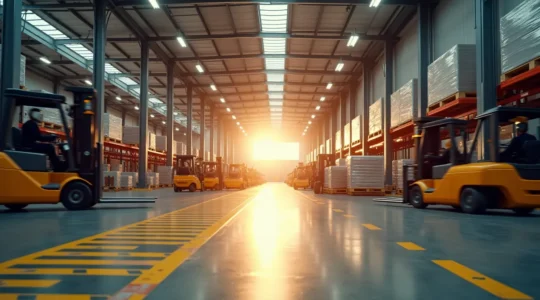
The core risk in transloading fragile electronics is the loss of direct control, leading to damage and inventory discrepancies that standard physical precautions cannot prevent. Effective mitigation hinges on establishing verifiable, data-driven operational protocols that function as your remote oversight….
Read more
A “cargo worthy” container is not a guarantee against water damage; the true risk lies in atmospheric condensation and systemic failures that standard inspections miss. The container’s ownership model (Shipper vs. Carrier) directly dictates your control over quality and maintenance…
Read more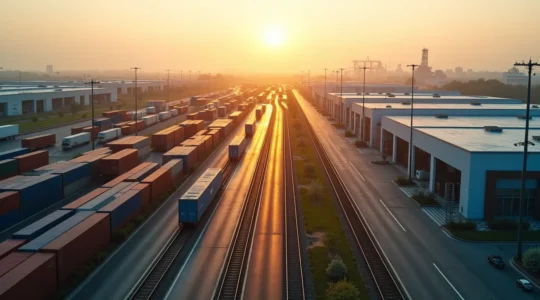
The key to cutting intermodal emissions isn’t just mode-shifting to rail; it’s architecting a system that eradicates the operational friction at transfer points where costs and carbon truly accumulate. Genuine carbon savings come from synchronizing truck, rail, and sea handoffs…
Read more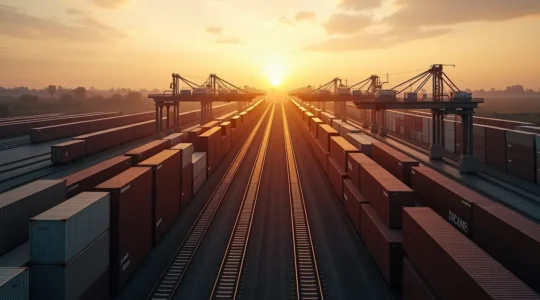
Shifting to rail is not about flipping a switch; it’s a strategic mastery of economic break-even points and operational complexities. Rail’s true cost advantage emerges only after a 500-mile threshold due to high fixed terminal costs that must be amortized…
Read more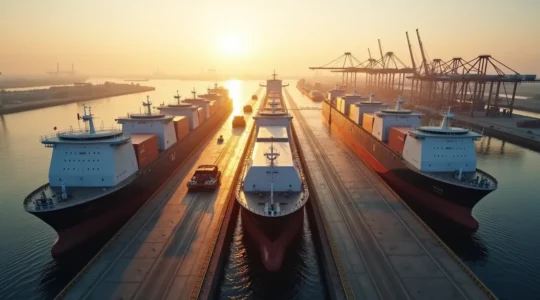
Choosing the right project cargo vessel goes far beyond dimensions—it’s about proactively managing the total cost of the voyage. Vessel selection must account for hidden port costs and infrastructure limitations, not just the charter rate. Thorough vessel vetting, including maintenance…
Read more