
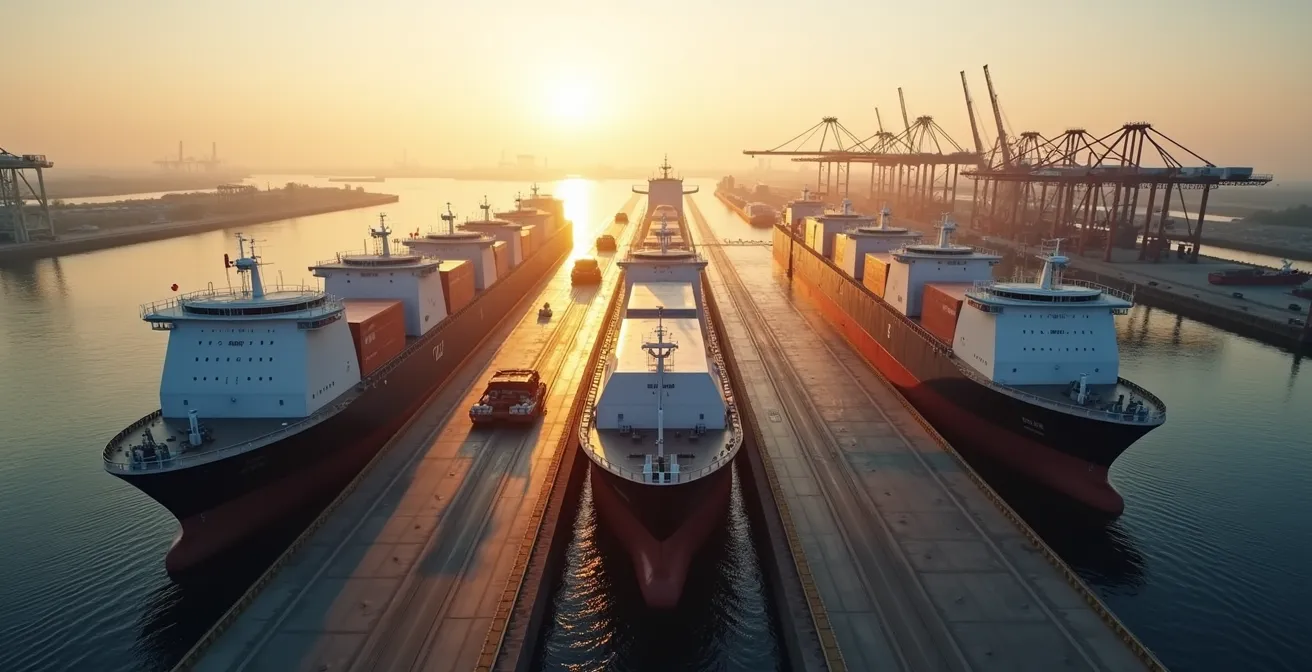
Choosing the right project cargo vessel goes far beyond dimensions—it’s about proactively managing the total cost of the voyage.
- Vessel selection must account for hidden port costs and infrastructure limitations, not just the charter rate.
- Thorough vessel vetting, including maintenance and P&I records, is critical to avoid catastrophic failures like General Average.
Recommendation: Adopt a portfolio approach to capacity and a risk-based framework for vessel selection to ensure your project’s success.
For any project cargo manager, the moment of truth arrives when a multi-million-dollar component is lifted over the water. At that point, the choice of vessel is no longer a line item on a budget; it’s the physical embodiment of your risk strategy. The conventional wisdom focuses on a simple matching game: if the cargo is on wheels, book a RoRo; if it’s heavy, find a LoLo. This approach, however, dangerously oversimplifies a complex equation where the true costs are often hidden.
The reality is that the charter rate is merely the entry fee. The real financial exposure lies in what happens next: port congestion, equipment failure, regulatory penalties, or geopolitical delays. These are the factors that can turn a profitable project into a costly lesson in logistics. While discussions often revolve around cargo dimensions and lifting capacity, the most seasoned charter brokers and project shippers look elsewhere. They analyze the operational resilience of the entire voyage.
This guide departs from the simplistic “what ship for what cargo” narrative. Instead, we will adopt the perspective of a charter broker, focusing on a strategic risk assessment. The ‘right’ vessel is not just the one that can carry your cargo, but the one that best mitigates the hidden financial and operational vulnerabilities across the entire logistics chain. It’s a shift from matching dimensions to mastering risk.
We will dissect the critical decision points that define a successful project shipment. By exploring the nuances of vessel selection—from port infrastructure constraints to the fine print of environmental mandates—you will learn how to safeguard your high-value assets and protect your bottom line from the unforeseen variables of ocean transport.
Summary: A Strategic Guide to Vessel Selection for Project Cargo
- Why Megaships cause longer delays at port despite their massive capacity?
- How to ship heavy rolling machinery without dismantling it for a container?
- Geared or Gearless: Which vessel to charter for ports with poor infrastructure?
- The maintenance oversight on older vessels that leads to General Average declarations
- When will LNG-powered vessels become the standard for carbon-neutral shipping routes?
- How to secure maritime ocean container shipping space during global capacity crunches?
- How to move heavy bulk commodities safely across unstable geopolitical regions?
- How to prepare for upcoming environmental mandates impacting diesel fleets?
Why Megaships cause longer delays at port despite their massive capacity?
The allure of the Ultra Large Container Vessel (ULCV) is its promise of economies of scale. However, for project cargo, these megaships often introduce a costly paradox: their immense size creates significant downstream bottlenecks. While they move thousands of TEUs, their arrival swamps port infrastructure, causing yard congestion and delaying the discharge of specialized, out-of-gauge (OOG) cargo. This is particularly critical as the global project cargo market is expected to grow to 672.32 billion USD by 2031, making the financial impact of every delay more severe.
Project cargo is often the last to be discharged and requires specialized handling, which is frequently disrupted by the sheer volume of standard containers. The result is an increase in the Total Cost of Voyage (TCV), a metric that extends far beyond the freight rate. It encompasses demurrage and detention fees, but also the often-crippling costs of missed project deadlines, production standstills, and penalties. A project manager must calculate this total exposure, factoring in everything from port-side storage overflows to the surge pricing of inland transport when capacity is strained.
The strategic move is often to opt for smaller, more flexible vessels calling at secondary, less congested ports. While the per-slot cost might seem higher, the reduction in port time, demurrage risk, and inland transit complexity can lead to a significantly lower TCV. The critical calculation is not the cost to ship, but the total cost to deliver and install on schedule.
How to ship heavy rolling machinery without dismantling it for a container?
Shipping heavy, self-propelled machinery like excavators, cranes, or agricultural equipment presents a fundamental choice: the efficiency of Roll-on/Roll-off (RoRo) versus the versatility of Lift-on/Lift-off (LoLo). The decision extends beyond simple logistics; it’s a calculated assessment of risk, cost, and operational integrity. Dismantling complex machinery to fit into standard containers introduces significant risks of damage, loss of small parts, and complex reassembly at the destination, often in less-than-ideal field conditions.
RoRo vessels are purpose-built for this task, treating the cargo as drivable units. This method drastically reduces handling, minimizing the risk of damage associated with crane lifts. The machinery is simply driven onto the vessel and secured, a process that is both faster and inherently safer. Conversely, LoLo operations on a Multi-Purpose Vessel (MPV) or bulk carrier involve lifting the unit, which introduces multiple critical risk points, from the lifting points on the cargo itself to the crane’s operation and the stowage and lashing on deck. This increased risk is often reflected in higher insurance premiums.
This table outlines the core trade-offs between the two methodologies:
| Method | Loading Capacity | Risk Level | Insurance Impact | Port Requirements |
|---|---|---|---|---|
| RoRo (Roll-on/Roll-off) | 375 tonnes ramp capacity | Lower – no crane lifting | Standard rates | Special low-bed trailers needed |
| LoLo (Lift-on/Lift-off) | Up to 3,000 tonnes with heavy-lift cranes | Higher – lifting operations | Premium rates | Heavy-lift shore cranes required |
Regardless of the method, the presence of a Marine Warranty Surveyor (MWS) is non-negotiable for high-value assets. The surveyor’s role is to verify that all stowage, lashing, and securing procedures meet or exceed industry standards, ensuring the cargo’s integrity throughout the voyage.
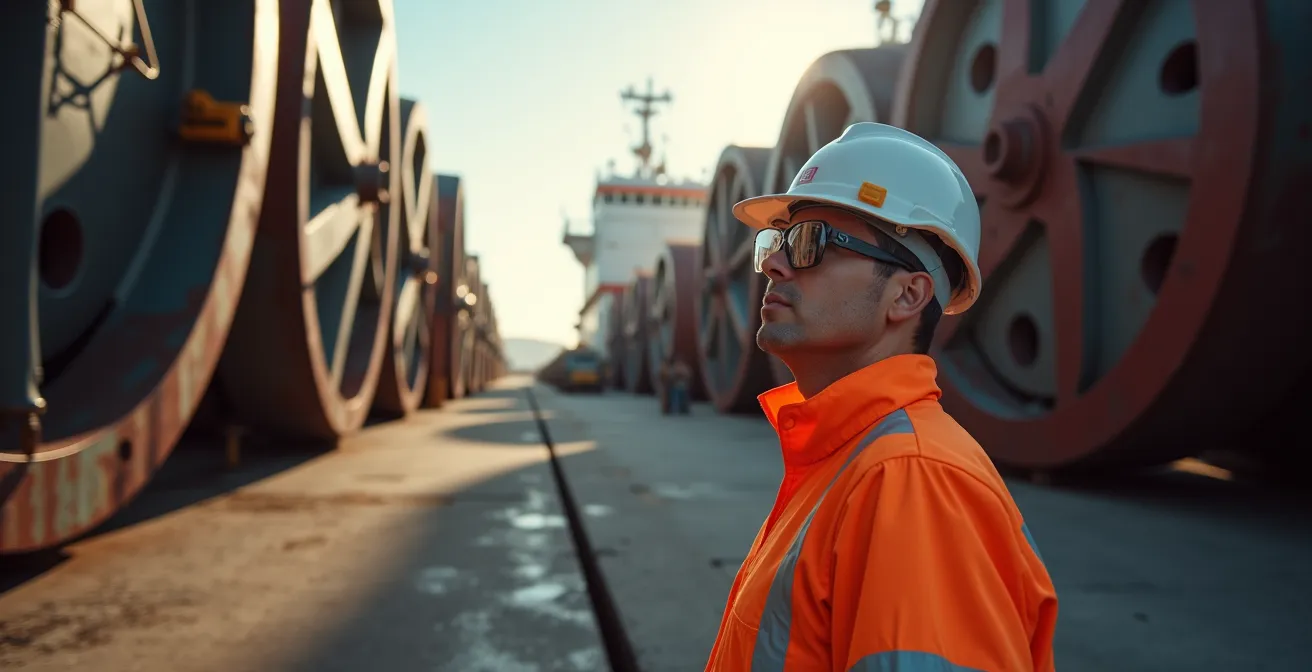
Ultimately, the decision rests on a balance of factors. While LoLo offers access to a wider range of ports, the operational simplicity and reduced risk profile of RoRo make it the superior choice for high-value rolling stock whenever a suitable service is available. The key is to evaluate the entire chain, from factory to final site, and select the path of least risk.
Geared or Gearless: Which vessel to charter for ports with poor infrastructure?
A vessel’s dependency on shore-side equipment is a critical factor in project logistics, especially when operating in developing nations or remote locations. The choice between a geared vessel (equipped with its own cranes) and a gearless vessel (which relies entirely on port cranes) is a fundamental decision that impacts cost, speed, and operational resilience.
Chartering a geared vessel provides self-sufficiency. It’s an insurance policy against inadequate or non-existent shore facilities, allowing your cargo to be discharged anywhere with a suitable quay. This autonomy, however, comes at a premium. Geared vessels command higher daily charter rates (often 15-20% more) and can have slower discharge speeds compared to high-capacity shore cranes. Furthermore, the vessel’s gear itself introduces a point of potential failure, with maintenance and certification becoming critical vetting points.
A gearless vessel is a more economical option, but it ties your operation’s success directly to the destination port’s capabilities. Before committing to a gearless charter, rigorous due diligence is required to confirm the availability, capacity, and operational status of shore cranes. A miscalculation can leave a vessel stranded, incurring massive demurrage costs while waiting for mobile cranes to be sourced and positioned.
The decision matrix below breaks down the key considerations:
| Factor | Geared Vessel | Gearless Vessel |
|---|---|---|
| Shore crane dependency | Self-sufficient | Requires port cranes |
| Daily charter rate | Higher (+15-20%) | Lower baseline |
| Operation speed | Slower (ship’s cranes) | Faster with shore equipment |
| Lifting capacity | Limited to ship’s gear | Depends on shore facilities |
| Insurance risk | Higher for older vessels | Standard rates |
For high-risk destinations, a geared vessel is often the prudent choice. However, this choice must be backed by contingency planning. This includes pre-identifying local mobile crane providers as a backup, verifying the ship’s gear certification records, and ensuring the charter party agreement clearly defines liability in the event of equipment failure.
The maintenance oversight on older vessels that leads to General Average declarations
One of the most feared phrases in shipping is “General Average.” It is a maritime law principle where all stakeholders in a sea venture (shipowner and cargo owners) proportionally share losses resulting from a voluntary sacrifice of part of the ship or cargo to save the whole. A catastrophic engine failure, a fire, or a structural issue on an older, poorly maintained vessel is a common trigger. For a project shipper, this can mean their multi-million-dollar cargo is held hostage until they contribute a significant bond, regardless of whether their cargo was damaged.
The primary cause is often deferred or substandard maintenance, a risk that increases with a vessel’s age. Some of the heavy lift fleet still in operation dates back decades, with certain aging heavy lift vessels having reached their maximum lifting capacity in 1978, highlighting the long service life and potential for wear. Relying solely on a vessel’s age as a vetting criterion is insufficient. A 25-year-old vessel from a reputable owner with impeccable maintenance logs can be a better risk than a 10-year-old vessel with a spotty record.

Thorough vessel vetting is the only defense. This goes far beyond a superficial inspection. It involves a deep dive into the vessel’s history and operational fitness, creating a comprehensive risk profile. An expert charter broker will scrutinize not just the ship itself, but the entire management ecosystem around it.
Your Action Plan: Vessel Vetting Checklist Beyond Age
- Review the vessel’s SIRE (Ship Inspection Report Programme) reports for patterns of deficiencies.
- Analyze the owner’s P&I (Protection and Indemnity) Club reputation and the vessel’s specific claims history.
- Scrutinize Port State Control inspection records from the last 3 years for detentions or recurring issues.
- Verify the maintenance logs for the main engine and auxiliary generators, paying close attention to overhaul dates.
- Inspect records for the ballast water treatment system, as its failure can lead to costly port delays and fines.
By treating vessel selection as a forensic exercise, project managers can significantly mitigate the risk of being caught in a General Average situation, protecting their cargo and their project’s financial viability.
When will LNG-powered vessels become the standard for carbon-neutral shipping routes?
The question of LNG’s dominance is no longer a futuristic debate; it is an immediate commercial consideration driven by a wave of environmental regulations. The transition to carbon-neutral shipping is being forced by powerful “regulatory headwinds” that are already impacting chartering decisions. For project cargo, which often involves long-term planning, understanding these mandates is critical to avoid future costs and operational disruptions.
The International Maritime Organization (IMO) has implemented two key measures: the Energy Efficiency Existing Ship Index (EEXI) and the Carbon Intensity Indicator (CII). The EEXI is a one-time certification of a vessel’s technical design, often met by implementing an Engine Power Limitation (EPL). The CII, however, is an annual operational rating (A to E) that measures how efficiently a ship transports cargo. A poor CII rating can result in a vessel being required to implement a corrective action plan and can damage its commercial viability.
This has a direct impact on charterers. The CII measures how efficiently a vessel above 5,000 GT (gross tonnage) transports goods or passengers. To maintain a good rating, vessel owners are increasingly resorting to slow steaming, which adds days or even weeks to voyage times. For time-sensitive projects, chartering an older, less efficient diesel-powered vessel is now a significant schedule risk. LNG-powered vessels, along with those using other alternative fuels like methanol, offer superior CII ratings and are less susceptible to these operational constraints.
While the upfront cost to charter a “green” vessel may be higher, it must be weighed against the potential cost of delays and the increasing likelihood of carbon taxes, such as the EU’s Emissions Trading System (ETS) for shipping. The “standard” is shifting now, not in a decade. The right vessel choice today is one that is compliant, efficient, and resilient to the coming regulatory storm.
How to secure maritime ocean container shipping space during global capacity crunches?
Global capacity crunches, whether caused by pandemics, geopolitical events, or economic booms, can leave project shippers scrambling for space. During these volatile periods, the traditional spot market becomes a high-risk, high-cost gamble. Relying on a single carrier or freight forwarder is a recipe for failure. The strategic response is to build a diversified Capacity Portfolio, a multi-layered approach that creates resilience and flexibility.
This strategy moves away from transactional bookings and towards a relationship-based ecosystem. The foundation is establishing long-term contracts with a few core carriers, securing a baseline of guaranteed volume. However, this is not enough. These contracts should be supplemented with volume agreements with specialized Non-Vessel Operating Common Carriers (NVOCCs). These NVOCCs often have their own co-loading agreements and can access capacity that individual shippers cannot.
Beyond contracts, maintaining strong relationships with trusted spot-market forwarders is crucial for handling unexpected surges or last-minute needs. Another powerful, though more capital-intensive, tactic is to evaluate the use of Shipper-Owned Containers (SOCs). Owning your own containers decouples you from the carriers’ equipment shortages, meaning you only need to secure a “slot” on the vessel, which can be an easier negotiation.
Finally, a key element of the portfolio is thinking outside the container box. When container vessel space is unobtainable, shifting to breakbulk service on Multi-Purpose Vessels (MPVs) becomes a viable alternative. Specialized fleets, with lifting capacities ranging from 400 to 3,000 tons, are designed for this type of cargo and operate outside the congested container trade lanes.
How to move heavy bulk commodities safely across unstable geopolitical regions?
When a voyage transits through high-risk areas—whether prone to piracy, conflict, or political instability—the vessel itself becomes a primary component of the security apparatus. The choice is no longer about deadweight tonnage or charter rates; it’s about the ship’s ability to deter, evade, and protect its crew and cargo. As Senior Marine Risk Consultant Jarek Klimczak states, this principle is absolute.
Vessel selection itself is an integral part of the security plan.
– Jarek Klimczak, AXAXL Marine Risk Report
The first layer of defense is information. A thorough threat assessment of the intended route is mandatory. This involves consulting maritime security agencies, P&I Clubs, and insurers to understand the specific risks, from piracy in the Gulf of Guinea to state-level threats in contested waters. Based on this assessment, a specific security protocol must be implemented. This includes verifying the vessel’s compliance with Best Management Practices (BMP5), the industry standard for piracy deterrence.
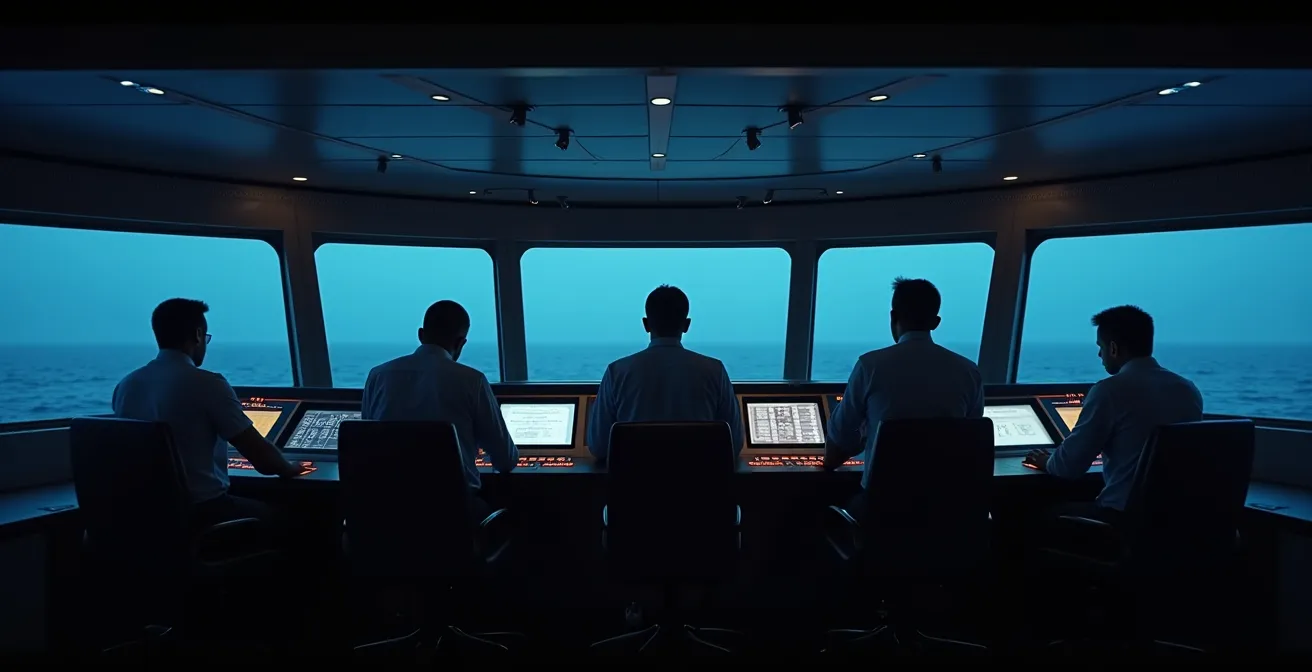
Key vessel-specific security features become critical vetting points. The presence and condition of a citadel, or safe room, for crew protection is non-negotiable for transits through piracy-prone areas. The decision to embark armed security guards is based on a clear-eyed assessment of the threat level and flag state regulations. Furthermore, the vessel’s flag can be a strategic asset or a liability. A neutral flag state may be preferable when navigating politically sensitive or contested sea lanes.
Real-time monitoring is the final piece of the puzzle. Implementing strict protocols for Automatic Identification System (AIS) usage and having a clear plan for route deviation in response to emerging threats are essential. In this high-stakes environment, the right vessel is the one that is hardened, prepared, and managed by a crew trained for the specific risks they are about to face.
Key Takeaways
- Vessel choice is a risk management function, not just a logistical one; the charter rate is only the start of your total cost exposure.
- Look beyond the vessel itself: Port infrastructure, vessel maintenance history, and regulatory compliance are as crucial as the ship’s physical capacity.
- Proactive planning is essential: A diversified capacity strategy and thorough, forensic-level vessel vetting are non-negotiable for project success.
How to prepare for upcoming environmental mandates impacting diesel fleets?
The era of cheap, consequence-free fuel consumption is over. A wave of environmental mandates is actively reshaping maritime operations, and project shippers who fail to prepare will face significant financial and scheduling impacts. The two most prominent regulations, EEXI and CII, are not future problems; they are actively affecting voyage calculations today. Understanding their distinct impacts is crucial for strategic chartering and avoiding the pitfalls of non-compliance.
The EEXI (Energy Efficiency Existing Ship Index) is a technical measure of a ship’s energy efficiency by design. To comply, many older vessels have had to install an Engine Power Limiter (EPL), which permanently reduces their maximum achievable speed. This directly impacts voyage duration and a project’s critical path. The CII (Carbon Intensity Indicator), on the other hand, is an operational measure of how efficiently the ship runs annually. A poor CII rating forces a vessel into a corrective plan, which almost always involves slow steaming to reduce emissions.
This table highlights the direct consequences for charterers:
| Regulation | Measurement | Operational Impact | Timeline Consequence |
|---|---|---|---|
| EEXI | Energy efficiency design index | May require engine power limitation | Reduced maximum speed |
| CII | Annual operational efficiency | Forces slow steaming | Added days to voyage |
For project managers, this means that the advertised transit time for an older, diesel-powered vessel may no longer be realistic. You must now factor in a “regulatory buffer” to account for reduced speeds. Chartering a modern, more fuel-efficient vessel, or one powered by alternative fuels like LNG, may come at a premium, but it buys you schedule certainty. This is a classic trade-off: pay more upfront for a compliant vessel or risk unpredictable and costly delays with a less efficient one. The smartest choice is to bake these regulatory risks into your initial cost-benefit analysis.
To navigate these complex technical, commercial, and regulatory waters effectively, your next step is to integrate this risk-based assessment framework into every chartering decision, transforming vessel selection from a simple task into a strategic advantage.